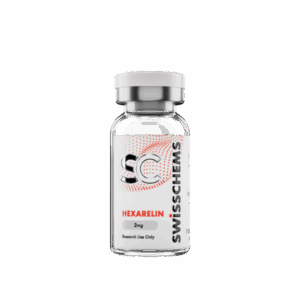
Product Usage: This product is intended for research purposes only.
All product information available on this website is for educational purposes only. Any form of bodily introduction into humans or animals is strictly prohibited by law. This product should only be handled by licensed and qualified professionals. It is not a drug, food, or cosmetic, and must not be misbranded, misused, or mislabeled as such.

BPC-157 with Arginine Salt
During our packaging transition, you may receive products with either our previous or updated label. Rest assured, the formulation, purity and quality remain exactly the same as per our standards.

BPC-157 is a synthetic 15-amino-acid pentadecapeptide derived from the gastric mucosal protein BPC. In vitro studies document interactions with VEGFR2, EGFR, and FAK phosphorylation cascades, with modulation of pro-angiogenic signalling networks. Preclinical in vivo models have examined its effects on nitric oxide synthase activity, extracellular matrix protein expression, and actin cytoskeletal dynamics in connective tissue contexts.
- High Purity – 99% Purity Guaranteed
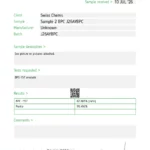
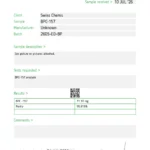
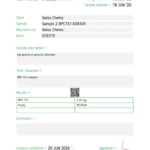
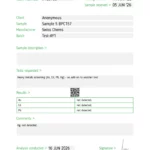
- Independently Lab Tested
- Research Grade Quality
- For Laboratory Research Use Only
3D Molecular Structure
Drag to rotate · scroll to zoom| Chemical Formula | C68H112N20O24 |
|---|---|
| Synonyms | Body Protection Compound-157, Bepecin, PL 14736 |
| Molar Mass | 1,419.5 g/mol |
| CAS Number | 137525-51-0 |
| PubChem CID | 175763564 |
| Total Compound Content | 5 mg per vial |
| Shelf Life | 36 months |

Why does BPC-157 demonstrate greater stability than many peptide-based research compounds?
BPC-157 contains multiple proline-rich motifs that are believed to contribute to resistance against enzymatic degradation under a range of experimental conditions. This structural characteristic distinguishes it from many peptide-based research compounds and has contributed to interest in its biochemical stability, peptide persistence, and signaling activity in mechanistic investigations.
What is the relationship between BPC-157 and VEGFR2/FAK signaling pathways?
Experimental investigations have reported enhanced VEGFR2 phosphorylation together with increased focal adhesion kinase (FAK) activity and downstream ERK1/2 signaling. These observations have positioned BPC-157 as a useful research tool for studying angiogenic signaling networks, cellular migration processes, cytoskeletal organization, and extracellular matrix-associated pathway regulation.
How does BPC-157 differ from TB-500 in mechanistic research?
BPC-157 and TB-500 are frequently compared because they influence distinct signaling networks. Research involving BPC-157 has focused primarily on VEGFR2, FAK, ERK1/2, eNOS, and extracellular matrix-associated pathways, whereas TB-500 investigations emphasize actin dynamics, cytoskeletal organization, cell migration, and tissue remodeling mechanisms. Their differing mechanistic profiles make them valuable tools for comparative studies of peptide-mediated signaling and cellular regulatory processes.
-
SALE
-
SALE
-
SALE
-
-
SALE
-
-
SALE