Product Usage: This product is intended for research purposes only.
All product information available on this website is for educational purposes only. Any form of bodily introduction into humans or animals is strictly prohibited by law. This product should only be handled by licensed and qualified professionals. It is not a drug, food, or cosmetic, and must not be misbranded, misused, or mislabeled as such.

GHK-Cu Copper Peptide
During our packaging transition, you may receive products with either our previous or updated label. Rest assured, the formulation, purity and quality remain exactly the same as per our standards.

GHK-Cu is a synthetic tripeptide-copper complex demonstrating specific molecular interactions in experimental models. The compound consists of glycyl-L-histidyl-L-lysine sequence chelated with copper, showing unique binding properties in laboratory studies. Research indicates selective cellular pathway modulation in controlled experimental conditions.
- High Purity – 99% Purity Guaranteed
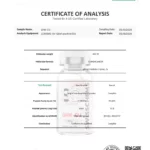
- Independently Lab Tested
- Research Grade Quality
- For Laboratory Research Use Only
3D Molecular Structure
Drag to rotate · scroll to zoom| Chemical Formula | C14H23CuN6O4+ |
|---|---|
| Synonyms | Prezatide copper, Copper peptide, BCP32687, SY253680, GHK copper; CG-copper peptide; [N2-(N-Glycyl-L-histidyl)-L-lysinato(2-)]copper |
| Molar Mass | 402.92 g/mol |
| CAS Number | 89030-95-5 |
| PubChem CID | 78122578 |
| Total Compound Content | 50 mg per vial |
| Shelf Life | 36 months |
What role does the copper(II) ion play in the structure of GHK-Cu?
The copper(II) ion is an essential structural component of GHK-Cu, forming a stable coordination complex through interactions with the Gly-His-Lys tripeptide. This metal-binding arrangement influences the physicochemical properties of the complex and has made GHK-Cu a widely studied model system for investigating copper coordination chemistry, ligand-metal interactions, metallopeptide stability, and copper-dependent signaling mechanisms.
What signaling pathways have been associated with GHK-Cu in experimental investigations?
Research involving GHK-Cu has examined interactions with signaling networks associated with extracellular matrix regulation, structural protein organization, metal-ion transport processes, and peptide-mediated cellular communication. Additional investigations have explored relationships between GHK-Cu and copper-dependent regulatory proteins, redox-associated signaling pathways, and metalloprotein activity, contributing to a broader understanding of metallopeptide signaling systems.
What distinguishes GHK-Cu from other copper-binding peptide complexes?
GHK-Cu combines a well-characterized tripeptide scaffold with high-affinity copper(II) coordination, resulting in a defined metallopeptide structure that has been extensively investigated in coordination chemistry and signaling research. Its established molecular architecture and documented metal-binding properties have made it a valuable reference compound for studies examining ligand-metal interactions, metallopeptide pharmacology, structure-function relationships, and copper-dependent regulatory mechanisms.
-
-
-
-
SALE
-
-
-
-