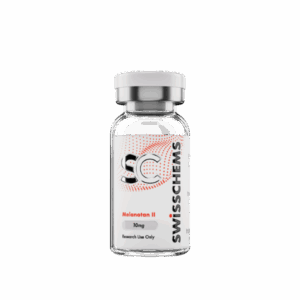
Product Usage: This product is intended for research purposes only.
All product information available on this website is for educational purposes only. Any form of bodily introduction into humans or animals is strictly prohibited by law. This product should only be handled by licensed and qualified professionals. It is not a drug, food, or cosmetic, and must not be misbranded, misused, or mislabeled as such.

PT-141 (Bremelanotide), 10mg
During our packaging transition, you may receive products with either our previous or updated label. Rest assured, the formulation, purity and quality remain exactly the same as per our standards.

PT-141 (Bremelanotide) is a synthetic cyclic lactam peptide and melanocortin receptor agonist that is a likely metabolite of Melanotan II, differing in that it carries a carboxyl group where MT-II carries an amide. It has high affinity for MC3R and MC4R. Research applications include MC3R/MC4R pharmacology, melanocortin system central/peripheral signalling, and dopaminergic pathway interaction studies.
- High Purity – 99% Purity Guaranteed
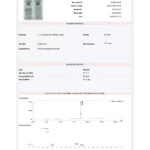
- Independently Lab Tested
- Research Grade Quality
- For Laboratory Research Use Only
3D Molecular Structure
Drag to rotate · scroll to zoom| Chemical Formula | C50H68N14O10 |
|---|---|
| Synonyms | Bremelanotide, PT141, Vyleesi (trade name) |
| Molar Mass | 1,025.2 g/mol |
| CAS Number | 189691-06-3 |
| PubChem CID | 9941379 |
| Total Compound Content | 10 mg per vial |
| Shelf Life | 36 months |
What distinguishes PT-141 from other melanocortin receptor agonists?
PT-141 is a cyclic heptapeptide melanocortin receptor agonist characterized by high affinity for MC3R and MC4R receptor subtypes. Its receptor interaction profile differs from other melanocortin ligands through variations in receptor subtype selectivity, binding characteristics, and signaling activity. These properties have established PT-141 as a valuable research tool for investigating melanocortin receptor pharmacology, receptor-mediated signaling mechanisms, and ligand-receptor interactions.
What is the structural difference between PT-141 and Melanotan II?
PT-141 and Melanotan II share a closely related cyclic heptapeptide framework but differ at the C-terminal region of the molecule. PT-141 contains a free carboxyl group, whereas Melanotan II contains a corresponding amide functionality. This structural variation influences physicochemical properties, receptor interaction characteristics, and pharmacological behavior, making the two compounds useful for comparative structure-activity relationship investigations within melanocortin receptor research.
Why is PT-141 useful for MC3R and MC4R research?
PT-141 exhibits strong activity at MC3R and MC4R receptor subtypes and has been extensively utilized in studies examining receptor activation, ligand-binding dynamics, receptor subtype selectivity, and downstream melanocortin signaling pathways. Its well-characterized pharmacological profile makes it a useful research tool for investigations involving melanocortin receptor biology, receptor pharmacology, signal transduction mechanisms, and comparative analyses of melanocortin receptor agonists.
-
-
SALE
-
-
-
-
SALE
-
SALE