Product Usage: This product is intended for research purposes only.
All product information available on this website is for educational purposes only. Any form of bodily introduction into humans or animals is strictly prohibited by law. This product should only be handled by licensed and qualified professionals. It is not a drug, food, or cosmetic, and must not be misbranded, misused, or mislabeled as such.
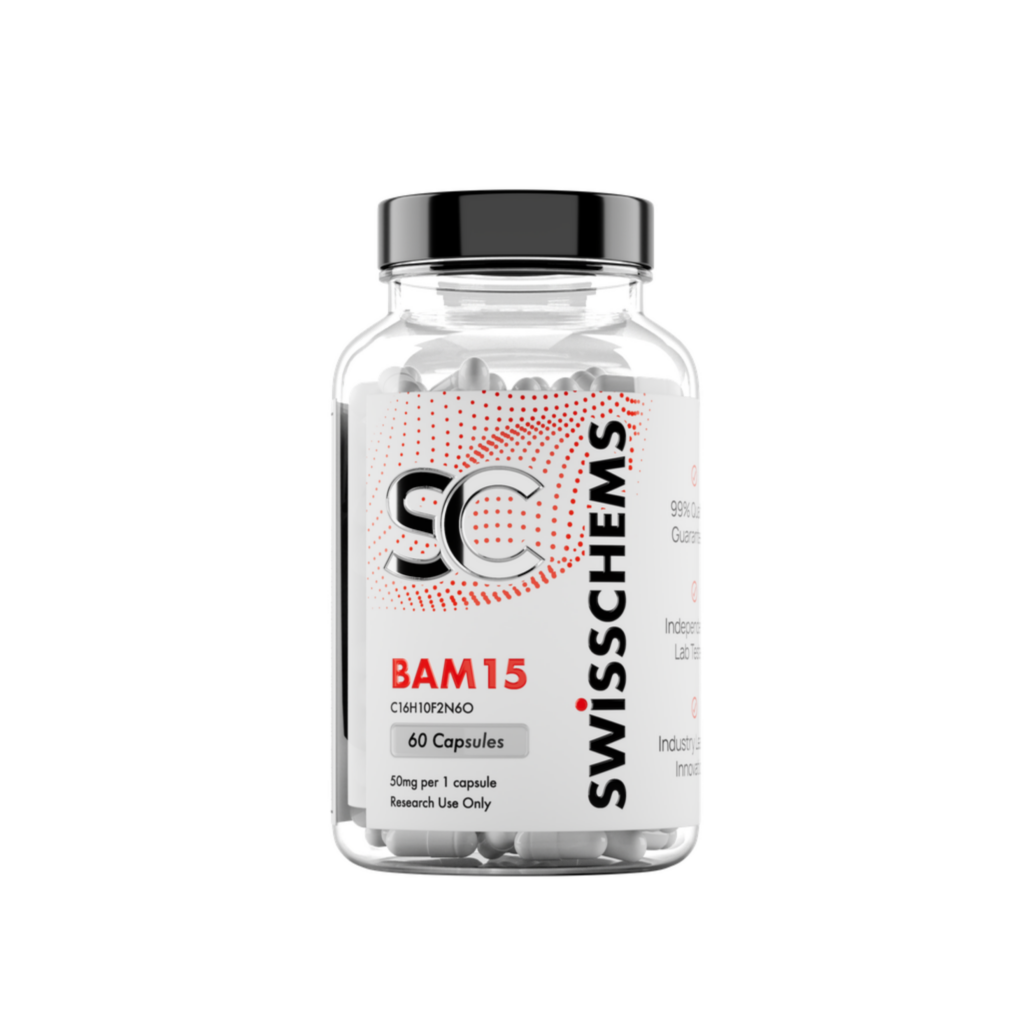
BAM-15 3000mg (50mg/capsule)
During our packaging transition, you may receive products with either our previous or updated label. Rest assured, the formulation, purity and quality remain exactly the same as per our standards.

BAM-15 is a synthetic mitochondrial uncoupling compound studied for its molecular properties, with particular research interest in its interactions with proton transport mechanisms in experimental models. As a chemical uncoupler, it is studied for its capacity to dissociate the mitochondrial proton gradient from ATP synthesis, distinguishing its mechanism from classical uncouplers in comparative bioenergetics research. Research applications include mitochondrial bioenergetics studies, proton transport pathway research, and comparative uncoupler pharmacology.
- High Purity – 99% Purity Guaranteed
- Independently Lab Tested
- Research Grade Quality
- For Laboratory Research Use Only
3D Molecular Structure
Drag to rotate · scroll to zoom| Chemical Formula | C16H10F2N6O |
|---|---|
| Synonyms | N5,N6-bis(2-fluorophenyl)-;BAM 15 (N5,N6-bis(2-Fluorophenyl)-[1,2,5]oxadiazolo[3,4-b]pyrazine-5,6-diamine) |
| Molar Mass | 340.29 g/mol |
| CAS Number | 210302-17-3 |
| PubChem CID | 565708 |
| Total Compound Content | 3000mg (50mg per capsule) |
| Shelf Life | 36 months |
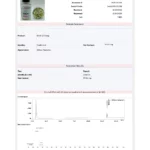
What oxygen consumption rate assays are used to characterise BAM-15's mitochondrial uncoupling activity?
Extracellular flux analyzers (Seahorse-type respirometry platforms) and Clark-type oxygen electrodes are standard tools for measuring BAM-15's effect on oxygen consumption rate (OCR) in cell-based and isolated mitochondria preparations. Researchers typically measure basal respiration, then introduce BAM-15 to assess the magnitude of uncoupled respiration (oxygen consumption not coupled to ATP synthesis), followed by oligomycin and electron transport chain inhibitor titrations to fully resolve the bioenergetic profile and confirm the proton transport mechanism.
How is BAM-15's mitochondrial membrane potential effect measured in cell-based research models?
Fluorescent potentiometric dyes (such as TMRM or JC-1) combined with flow cytometry or fluorescence microscopy are used to measure changes in mitochondrial membrane potential following BAM-15 exposure, allowing researchers to quantify the degree of proton gradient dissipation across a concentration range. These measurements are typically paired with parallel ATP level assays to characterise the relationship between membrane potential changes and downstream bioenergetic consequences in the specific cell model under study.
What comparative research has examined BAM-15 against other chemical mitochondrial uncouplers?
Comparative bioenergetics research has examined BAM-15 relative to other protonophore-class compounds, with particular research interest in selectivity profiles distinguishing effects on the mitochondrial inner membrane from effects on the plasma membrane. Such studies typically employ parallel OCR and membrane potential assays across multiple uncoupler compounds at matched concentrations, allowing researchers to characterise relative potency, selectivity windows, and structure-activity relationships within this compound class.
-
SALE
-
SALE
-
-
-
-
-
SALE
-
SALE