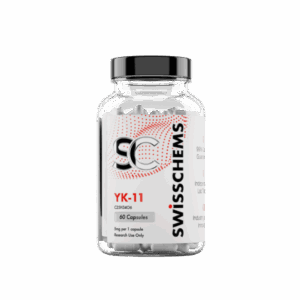
Product Usage: This product is intended for research purposes only.
All product information available on this website is for educational purposes only. Any form of bodily introduction into humans or animals is strictly prohibited by law. This product should only be handled by licensed and qualified professionals. It is not a drug, food, or cosmetic, and must not be misbranded, misused, or mislabeled as such.

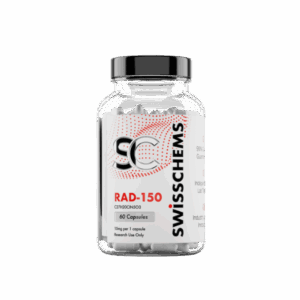
RAD-140 (Testolone), (10mg/capsule) 60 Capsules
During our packaging transition, you may receive products with either our previous or updated label. Rest assured, the formulation, purity and quality remain exactly the same as per our standards.

RAD-140 (Testolone) is a non-steroidal selective androgen receptor modulator (SARM) of the oxadiazole class, engineered for high-affinity, tissue-selective AR interaction. Radioligand competition assays confirm low-nanomolar Ki for AR, with functional selectivity characterised by differential co-regulator recruitment across tissue types in vitro. Research applications include AR structure–activity relationship studies, tissue-selective transcriptional activation profiling, and androgenic signalling pathway investigation.
- High Purity – 99% Purity Guaranteed
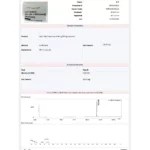
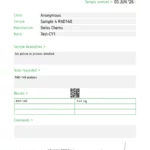
- Independently Lab Tested
- Research Grade Quality
- For Laboratory Research Use Only
3D Molecular Structure
Drag to rotate · scroll to zoom| Chemical Formula | C20H16ClN5O2 |
|---|---|
| Synonyms | 2-chloro-4-(((1R,2S)-1-(5-(4-cyanophenyl)-1,3,4-oxadiazol-2-yl)-2-hydroxypropyl)amino)-3-methylbenzonitrile, RAD 140, Testolone |
| Molar Mass | 393.8 g/mol |
| CAS Number | 1182367-47-0 |
| PubChem CID | 44200882 |
| Total Compound Content | 600 mg (10 mg per capsule) |
| Shelf Life | 36 months |
How does RAD-140 differ from steroidal androgen receptor ligands in receptor pharmacology research?
RAD-140 is a non-steroidal androgen receptor modulator that binds AR with high affinity while inducing ligand-specific receptor conformations distinct from those produced by steroidal ligands. These conformational differences influence co-regulator recruitment, transcriptional activity, and downstream signaling behavior, making RAD-140 a valuable tool for investigating selective androgen receptor modulation and ligand-dependent receptor dynamics.
Q: What is the half-life of RAD-140 and how is it metabolized?
Pharmacokinetic investigations report an elimination half-life of approximately 60 hours. Metabolic characterization indicates oxidative biotransformation followed by conjugation pathways, with CYP-mediated metabolism contributing to compound clearance. Elimination profiles have been documented in experimental systems through both biliary and renal pathways.
Why is RAD-140 commonly used in androgen receptor signaling research?
RAD-140 combines high-affinity androgen receptor binding with a well-characterized pharmacological profile, making it useful for studies examining receptor activation mechanisms, co-regulator interactions, androgen response element (ARE) signaling, and structure-activity relationships. Its non-steroidal scaffold also makes it a valuable comparator in investigations of ligand-dependent androgen receptor behavior and selective receptor modulation.
-
-
SALE
-
SALE
-
SALE
-
SALE
-
SALE

-
-
SALE