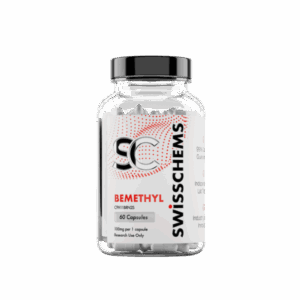
Product Usage: This product is intended for research purposes only.
All product information available on this website is for educational purposes only. Any form of bodily introduction into humans or animals is strictly prohibited by law. This product should only be handled by licensed and qualified professionals. It is not a drug, food, or cosmetic, and must not be misbranded, misused, or mislabeled as such.

MK-677 (Ibutamoren), (10mg/capsule) 60 Capsules
During our packaging transition, you may receive products with either our previous or updated label. Rest assured, the formulation, purity and quality remain exactly the same as per our standards.

MK-677 (Ibutamoren) is a non-peptide agonist of the growth hormone secretagogue receptor subtype 1a (GHS-R1a). Binding to GHS-R1a activates Gq/11-mediated phospholipase C signaling, leading to IP3 and DAG generation, intracellular calcium mobilization, and downstream signaling cascade activation. Research applications include receptor pharmacology, ligand-binding dynamics, signal transduction characterization, structure-activity relationship investigations, and comparative studies of GHS-R1a agonist activity.
- High Purity – 99% Purity Guaranteed
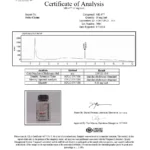
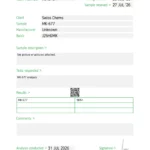
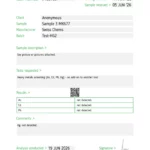
- Independently Lab Tested
- Research Grade Quality
- For Laboratory Research Use Only
3D Molecular Structure
Drag to rotate · scroll to zoom| Chemical Formula | C27H36N4O5S |
|---|---|
| Synonyms | Ibutamoren, CHEMBL13817, L 163191, L-163,191, CHEMBL542653, 1-(methanesulfonyl)-1'-(2-methyl-L-alanyl-O-benzyl-D-seryl)-1,2-dihydrospiro[indole-3,4'-piperidine] 192511-65-2 |
| Molar Mass | 624.8 g/mol |
| CAS Number | 159752-10-0 |
| PubChem CID | 6450830 |
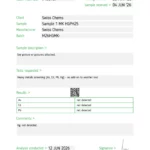
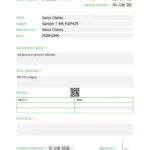
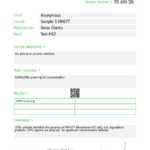
| Total Active Ingredient | 600 mg (10 mg per capsule) |
| Shelf Life | 36 months |
What is the half-life of MK-677 and how does this affect research protocol design?
MK-677 has an elimination half-life of approximately 24 hours in preclinical models, enabling stable plasma concentrations across preclinical protocols. This extended half-life is a key pharmacokinetic distinction from peptide-based GH secretagogues (e.g. GHRP-6, t½ ~15–20 minutes), which require multiple daily administrations to sustain GHS-R1a engagement. For long-duration GH axis studies, the long half-life reduces protocol variability.
What makes MK-677 a useful research tool for studying GHS-R1a signaling?
MK-677 is a non-peptide GHS-R1a agonist that exhibits prolonged receptor occupancy and resistance to enzymatic degradation. These properties allow researchers to investigate receptor activation kinetics, downstream signaling cascades, ligand-receptor interactions, and signal transduction dynamics over extended observation periods. Its well-characterized pharmacological profile has made it a widely used reference compound in GHS-R1a receptor pharmacology research.
How does MK-677 compare to GHRP-6 and GHRP-2 in laboratory models?
All three are GHS-R1a agonists, but MK-677 is a non-peptide small molecule with a ~24-hour half-life. GHRP-6 and GHRP-2 are hexapeptides requiring parenteral administration with half-lives under 30 minutes. GHRP-6 co-stimulates ghrelin-independent appetite pathways; GHRP-2 produces a stronger but shorter GH pulse. MK-677's sustained receptor occupancy and non-peptide structure support different experimental designs from injectable peptide secretagogues.
-
-
-
-
SALE
-
SALE
-
-
-