Product Usage: This product is intended for research purposes only.
All product information available on this website is for educational purposes only. Any form of bodily introduction into humans or animals is strictly prohibited by law. This product should only be handled by licensed and qualified professionals. It is not a drug, food, or cosmetic, and must not be misbranded, misused, or mislabeled as such.
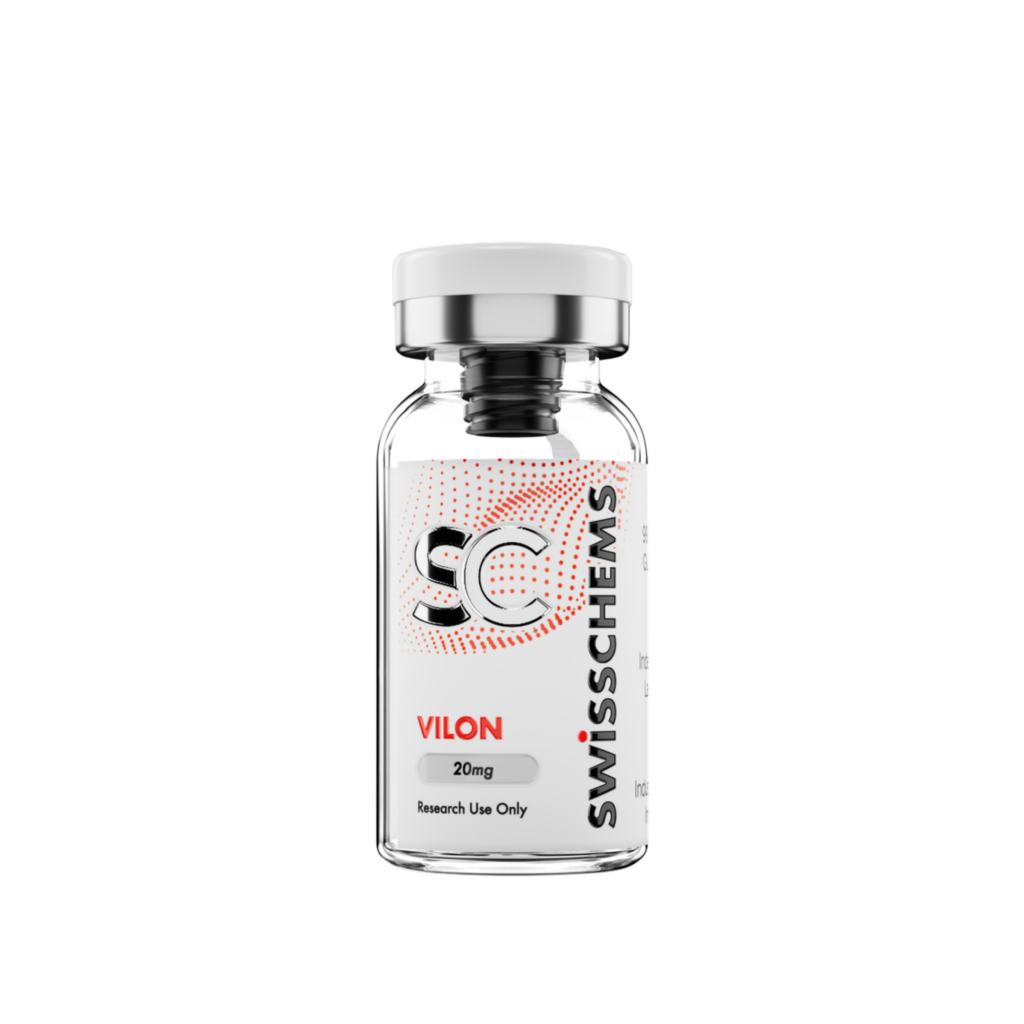
Vilon, 20mg
During our packaging transition, you may receive products with either our previous or updated label. Rest assured, the formulation, purity and quality remain exactly same as standards.

Vilon is a synthetic bioregulatory dipeptide studied for its immunomodulatory properties and potential role in aging-related cellular processes. Research interest centers on its influence on cellular regulation mechanisms associated with immune function, with additional research examining its possible effects on cellular pathways involved in chromatin structure and gene expression accessibility. Research applications include immunomodulatory pathway studies, chromatin structure research, and comparative bioregulatory dipeptide pharmacology.
- High Purity – 99% Purity Guaranteed
- Independently Lab Tested
- Research Grade Quality
- For Laboratory Research Use Only
3D Molecular Structure
Drag to rotate · scroll to zoom| Chemical Formula | C11H21N3O5 |
|---|---|
| Synonyms | Lysylglutamate, normophthal, Lyslglutamic acid |
| Molar Mass | 257.30 g/mol |
| CAS Number | 45234-02-4 |
| PubChem CID | 7010502 |
| Total Compound Content | 20mg per vial |
| Shelf Life | 36 months |
Every batch is independently lab tested for identity, purity and potency. View our lab testing program →
What immune cell models are used to study Vilon's immunomodulatory properties?
Lymphocyte and thymic cell culture models are standard systems for studying Vilon's reported immunomodulatory effects, with readouts typically including cytokine production profiles, lymphocyte proliferation assays, and cell-surface marker expression (such as CD4/CD5 in thymic differentiation contexts) following compound exposure. These cell-based readouts allow researchers to characterise specific immune cell population responses to Vilon exposure under controlled experimental conditions.
How is Vilon's reported effect on chromatin structure investigated in cellular aging research models?
A: Chromatin structure research examining Vilon typically uses chromatin accessibility assays (such as ATAC-seq or DNase accessibility methods) or microscopy-based heterochromatin/euchromatin ratio quantification in aged versus young cell models, comparing chromatin organisation patterns before and after compound exposure. Telomere length measurement in cultured lymphocytes is sometimes used as a complementary cellular aging biomarker alongside direct chromatin structure assessments.
What is the significance of exposure timing in experimental research examining Vilon's regulatory activity?
Some research models report that the developmental or experimental timing of Vilon exposure influences the magnitude of observed regulatory effects, a variable that researchers should account for in experimental design by standardising exposure timing relative to cell culture passage number, animal age, or developmental stage across treatment and control groups. This timing-dependence is a methodological consideration relevant to reproducing or comparing results across independently conducted Vilon studies.