Product Usage: This product is intended for research purposes only.
All product information available on this website is for educational purposes only. Any form of bodily introduction into humans or animals is strictly prohibited by law. This product should only be handled by licensed and qualified professionals. It is not a drug, food, or cosmetic, and must not be misbranded, misused, or mislabeled as such.
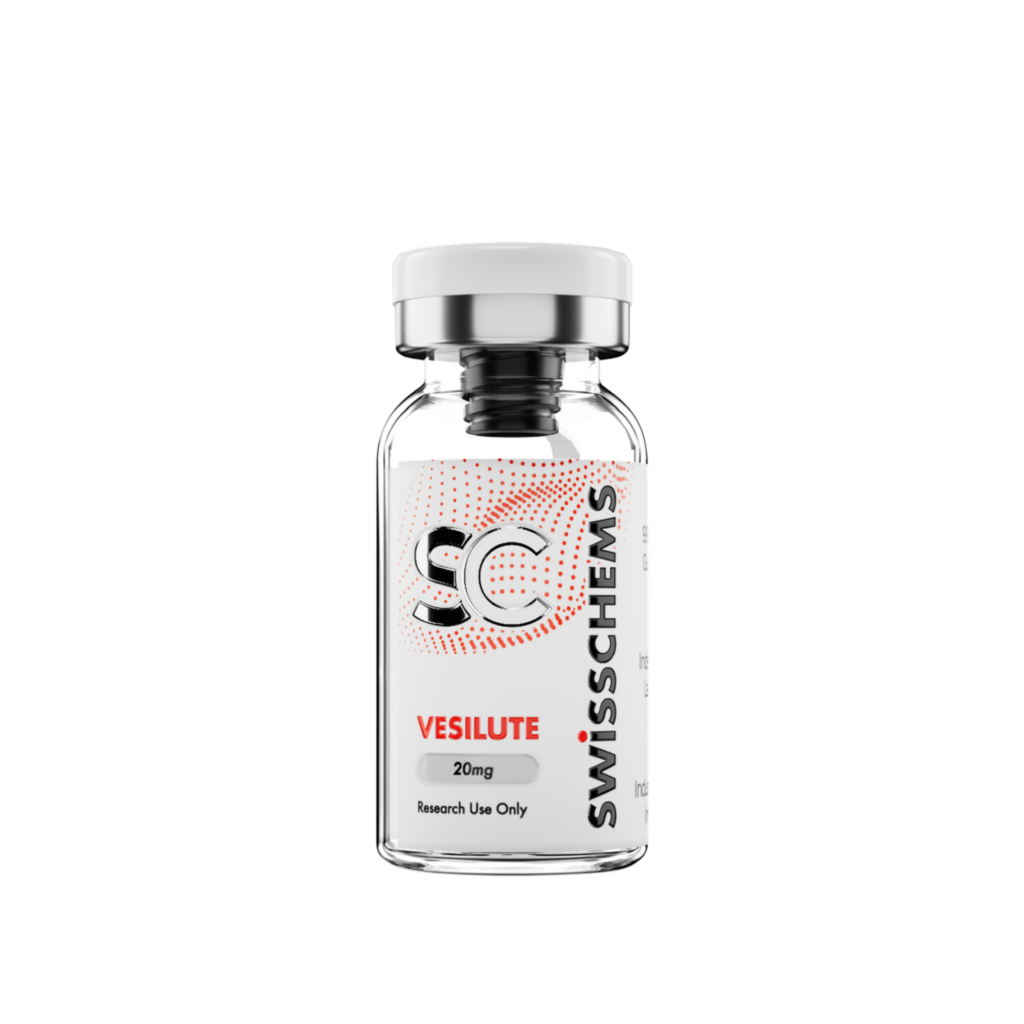
Vesilute, 20mg
NOTE: In some cases wherein the assigned top colors are out of stock, a different top color will be used to ensure that your order will not be delayed.
Peptides are stable at room temperature and can be stored in their original packaging for several days to weeks. For longer storage, keep them at 4 °C or colder, away from intense light. Do not shake peptides before or after reconstitution, refrigerate them, and handle with care.
You can purchase BAC water here:
BAC 10ml
During our packaging transition, you may receive products with either our previous or updated label. Rest assured, the formulation, purity and quality remain exactly same as standards.

Vesilute is a synthetic bioregulatory peptide from the Khavinson family, studied for its potential role in modulating prostate and urinary tract function. Preclinical data suggest it may influence pathways related to bladder activity and urinary system regulation. Like other cytomedines, Vesilute has been shown to support prostate tissue by enhancing microcirculation and regulating cellular activity. These effects are believed to involve epigenetic modulation and chromatin remodeling, consistent with mechanisms seen in Khavinson peptides.
- High Purity – 99% Purity Guaranteed
- Independently Lab Tested
- Research Grade Quality
- For Laboratory Research Use Only
Every batch is independently lab tested for identity, purity and potency. View our lab testing program →
What is the proposed mechanism for Vesilute's reported effect on bladder smooth muscle activity?
Vesilute is studied for a proposed interference with glycogen phosphorylase activation in smooth muscle tissue, a mechanism that, if confirmed, would prevent glycogen breakdown into glucose and thereby limit the immediate energy substrate available for sustained muscle contraction, favoring a relaxed smooth muscle state. Research investigating this mechanism typically uses isolated bladder smooth muscle tissue preparations in organ bath pharmacology setups, measuring contractile force in response to standard agonist stimulation with and without Vesilute pre-treatment.
How is Vesilute's effect on prostate tissue microcirculation studied in research models?
Prostate tissue models, including ex vivo tissue explants or in vivo rodent prostate models, are used to study Vesilute's reported effects on microcirculation, typically measuring blood flow parameters (via laser Doppler or similar microvascular imaging methods) and tissue markers of cellular proliferation relevant to prostate tissue regulation. These studies are conducted within the broader framework of bioregulatory peptide research examining organ-specific tissue effects mediated through epigenetic and chromatin-level mechanisms.
What chromatin remodeling research methods are applied to studying Vesilute's epigenetic mechanism hypothesis?
Chromatin accessibility and heterochromatin/euchromatin organisation assays — similar methods used across the broader bioregulatory peptide research literature — are applied to study Vesilute's proposed epigenetic mechanism, typically in genitourinary tissue-derived cell models. These methods allow researchers to assess whether Vesilute exposure produces measurable changes in chromatin structure that could plausibly underlie the tissue-level functional effects observed in bladder and prostate research models.