Product Usage: This product is intended for research purposes only.
All product information available on this website is for educational purposes only. Any form of bodily introduction into humans or animals is strictly prohibited by law. This product should only be handled by licensed and qualified professionals. It is not a drug, food, or cosmetic, and must not be misbranded, misused, or mislabeled as such.
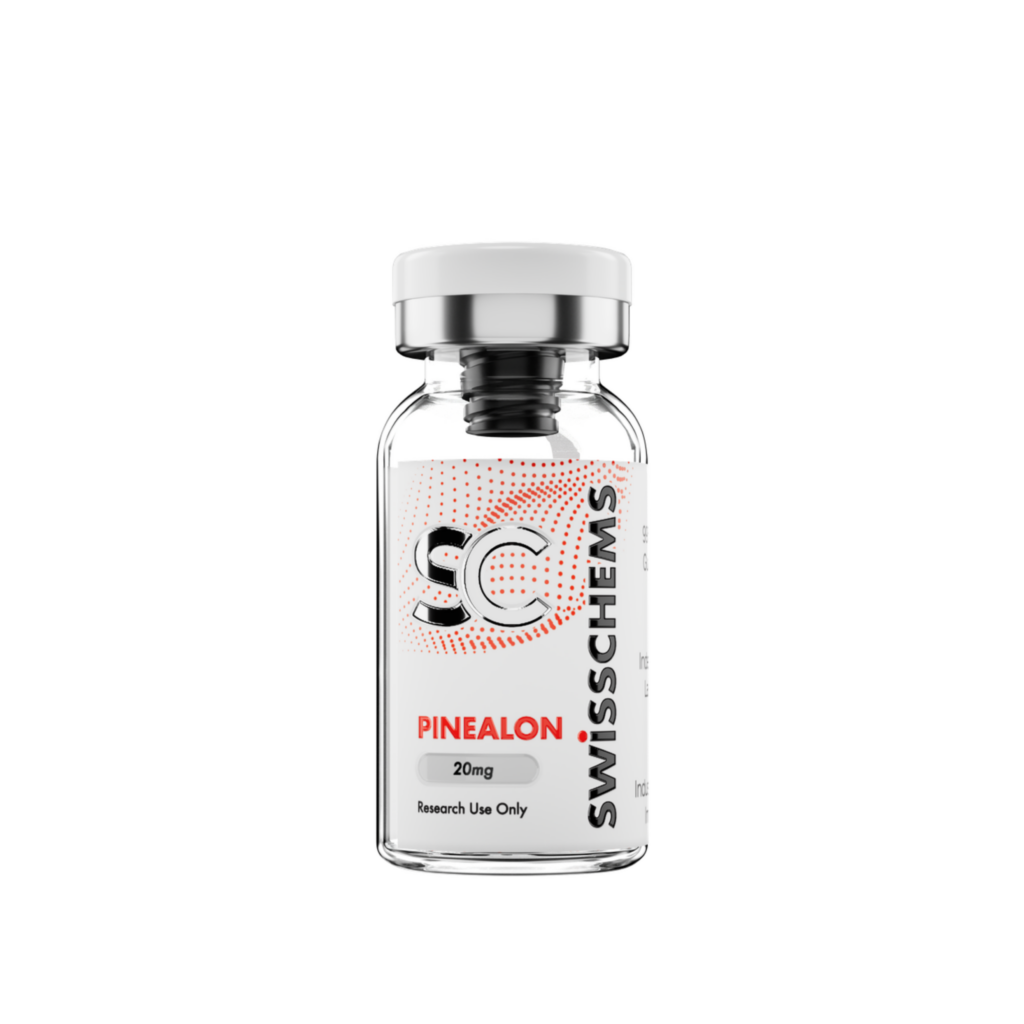
Pinealon, 20mg
During our packaging transition, you may receive products with either our previous or updated label. Rest assured, the formulation, purity and quality remain exactly same as standards.

Pinealon is a synthetic tripeptide composed of three amino acids, studied for its potential neuroprotective and nootropic properties in research models. Research interest centers on its proposed role in circadian rhythm regulation, memory retention, and learning process research, alongside investigation of its capacity to support various cell types against hypoxic stress in experimental settings. Research applications include neuroprotective pathway studies, circadian regulation research, and comparative bioregulatory tripeptide pharmacology.
- High Purity – 99% Purity Guaranteed
- Independently Lab Tested
- Research Grade Quality
- For Laboratory Research Use Only
3D Molecular Structure
Drag to rotate · scroll to zoom| Chemical Formula | C15H26N6O8 |
|---|---|
| Synonyms | Glutamylaspartylarginine, T-33 peptide |
| Molar Mass | 418.407 g/mol |
| CAS Number | 175175-23-2 |
| PubChem CID | 18220191 |
| Total Compound Content | 20mg per vial |
| Shelf Life | 36 months |
Every batch is independently lab tested for identity, purity and potency. View our lab testing program →
What cognitive research models are used to study Pinealon's proposed effects on memory and learning?
Experimental studies commonly utilize in vitro neural network models, organotypic neural tissue cultures, and cellular systems designed to assess neuroplasticity-associated pathways. Endpoints often include changes in synaptic protein expression, neuronal signalling markers, and gene-expression profiles associated with learning and memory processes.
How is Pinealon's proposed hypoxia-related activity investigated in experimental models?
Research frequently employs cell-culture systems exposed to controlled hypoxic or oxygen-glucose deprivation conditions. Common endpoints include cell viability, oxidative stress markers, apoptosis-associated biomarkers, and cellular stress-response pathways. These models allow assessment of concentration-response relationships and characterization of potential mechanisms associated with cellular adaptation to hypoxic stress.
What research models are used to study Pinealon's proposed role in circadian regulation?
Circadian research commonly utilizes cell-based clock-gene reporter systems and tissue-culture models examining expression patterns of core clock genes, including Per, Cry, Bmal1, and Clock. Molecular analyses are used to evaluate changes in circadian-associated signalling pathways and rhythmic gene-expression patterns following experimental exposure.